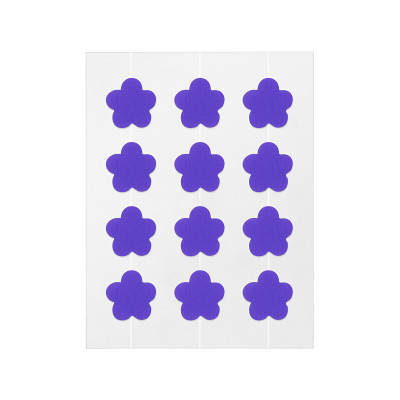
Microneedle Sleep Patches: Construction, Dose and What to Specify
A sleep patch is a delivery system, not an ingredient. What separates one product from another is the dose it carries, the array that carries it, how long it stays on skin, and what the pack is allowed to claim. Two patches with the same ingredient list can behave completely differently.
The category has grown faster than its documentation. Most articles describe what a sleep patch promises; almost none describe what to specify when you order one. This page covers the second question, because that is where the cost and the regulatory risk sit.
What the patch is made of
A dissolving microneedle sleep patch has four parts, and each one is a separate specification.
The backing layer. Holds the array together and is what you see and touch. Its flexibility decides how well the patch follows the skin.
The microdart array. Water-soluble darts that carry the actives and dissolve after application. Dart count, length and spacing are all tooling decisions.
The active load. The dose per patch, stated in milligrams, not as a percentage of a formula. A percentage tells a buyer nothing without the patch weight.
The adhesive ring. Keeps the patch in place for the wear time. A patch that lifts at hour three delivers less than its label says.
Only one of these is visible in a product photo. The other three are what a quotation is actually pricing.
Transdermal delivery: what the claim can and cannot say
The usual marketing argument is that a patch avoids the digestive system, and therefore delivers more of the active than a swallowed dose. That argument is plausible, but it is also a claim, and claims need a file behind them in most markets.
What a supplier can state factually: the patch delivers actives through the skin surface; the darts dissolve in the upper layers; the dose per patch is fixed at manufacture rather than measured by the user. What a supplier cannot state without evidence for that specific product: that it works faster, that it works better, or that it produces a specified blood level. Those are measured, not assumed.
Where the claim moves from structure to effect, the product usually moves category too — from supplement or cosmetic to medicine or medical device. That classification decides the label, the technical file and the import route, and it is cheaper to settle before artwork than after.
The four numbers to fix before quoting
Buyers routinely arrive with an ingredient list and no dose. The list cannot be quoted — 0.3 mg and 3 mg of the same active are different products at different prices, and only one of them matches the claim on the pack.
Where the manufacturing cost actually sits
Dissolving arrays are made by moulding, filling, drying and demoulding. Cost is driven less by the active than by yield: how many patches come out of a run intact, and how much drying time the formulation needs. A formulation that dries slowly occupies the line longer, and that shows up in the unit price without appearing anywhere on the specification sheet.
This is also why a sample can look perfect and a production run cannot repeat it. A hand-made sample bypasses the yield question. Ask what the production yield is, and what happens to patches that fail dart integrity.
What to test before a first shipment
- Dose uniformity — the active per patch, across the batch, not just the average.
- Dart integrity — whether the array survives packing, and how many darts are intact after application.
- Adhesion over the stated wear time — measured at the end of wear, not at application.
- Moisture and stability — water-soluble arrays are sensitive to humidity; the pack is part of the product.
Ask for the tests on the pack you are buying. A result produced in a different pouch does not transfer, because the barrier is what keeps the array stable.
How this fits a sourcing decision
Sleep patches are a crowded, claim-heavy category. The brands that survive it are the ones that can answer three questions in writing: what dose is in the patch, what the pack is allowed to say, and what happens when a customer complains. Everything else — design, scent, carton — is decoration on top of those three.
If you are comparing suppliers, the 12-point sourcing checklist applies here unchanged, and the channel view of the sleep category covers where these products actually sell.
Send the dose, the wear time and the target market and we will tell you which construction fits, what the array can hold, and where the claim needs to change before a mould is cut.
Request a quote