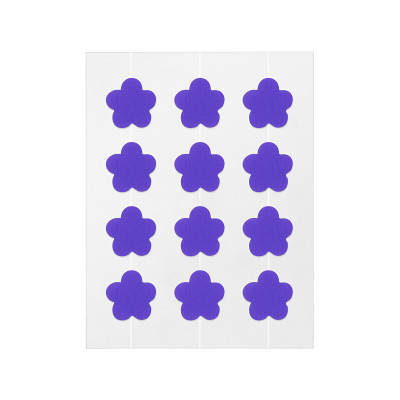
Pimple Patch Supplier: 12-Point Sourcing Checklist
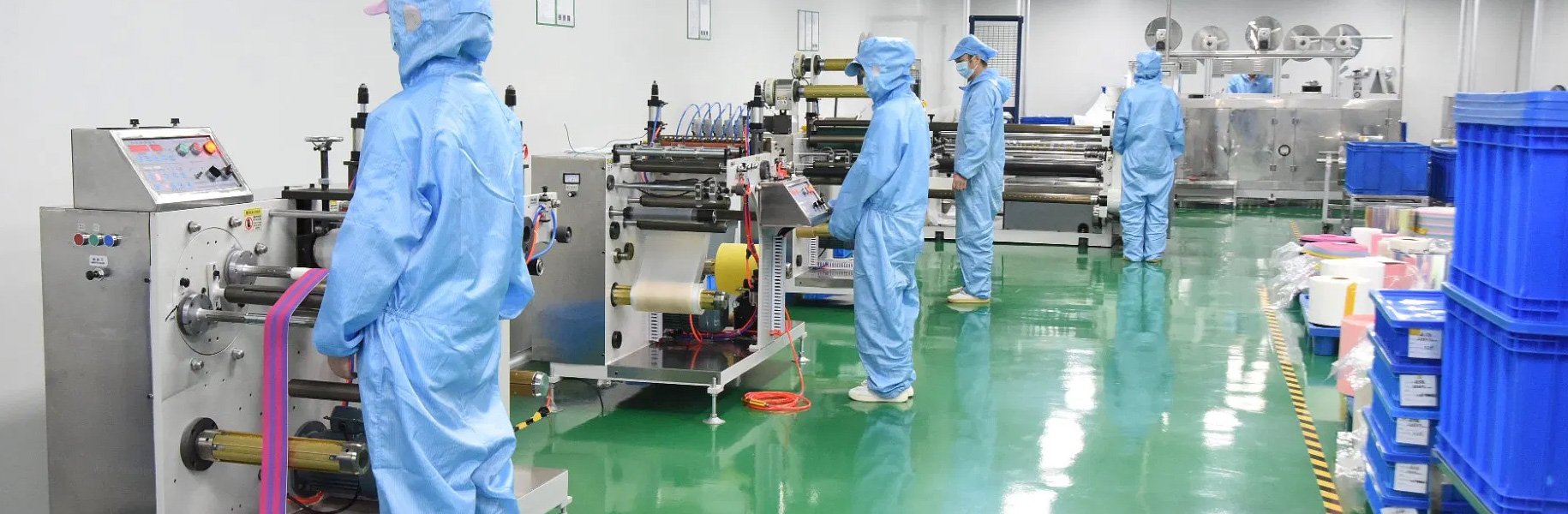
Most sourcing mistakes are made before the first sample is ordered. A supplier who cannot answer these twelve questions with specifics — numbers, certificate IDs, dates — will not become more specific after you pay a deposit.
This is the checklist we would use if we were buying acne patches instead of making them. Each point gives you the question to ask, what a credible answer looks like, and the red flag that should end the conversation. Work through it in order: the first six eliminate most unsuitable suppliers, and the last six decide between the two or three that remain.
The checklist at a glance
Are they a manufacturer or a trading company?
Can you verify their certifications independently?
What is the real minimum order quantity?
What does a sample actually include?
Is there a written material specification?
How deep does customization go?
How is colour controlled on print?
What does per-batch quality control look like?
Which documents ship with each batch?
What is the real production lead time?
Is the packaging and labelling compliant for your market?
What are the commercial terms?
The twelve checks in detail
01Are they a manufacturer or a trading company?
Ask: “Can you send a walkthrough video of the line that will run my order, and the address of the facility?”
A credible answer: It names a specific facility, shows coating, die-cutting and packing, and the company on the FDA registration matches the company you are negotiating with.
Red flag: "Our factory" with no address, or a certificate registered to a different legal entity that nobody can explain. Trading companies are not automatically a problem — but you should know which one you are buying from, because it decides who answers for a failed batch.
02Can you verify their certifications independently?
Ask: “Can you send the FDA establishment registration number (FEI) and the ISO 13485 certificate number, with the certification body named?”
A credible answer: It gives you identifiers you can look up yourself. Ours are FEI 3012706495 and ISO 13485 certificate 69136. Note the wording: a facility can be registered with the FDA without any product being approved. A supplier who says "FDA approved" for an acne patch is either misinformed or hoping you are.
Red flag: Certificates with no number, no issuing body, or an expiry date that has passed. Ask for the current certificate, not the one from the website footer.
03What is the real minimum order quantity?
Ask: “What is the MOQ per design, and does it change if I print my logo?”
A credible answer: It separates the two cases, because printing adds setup. Ours is 1,000 units per design for standard formats and 3,000 units for custom printing and branded packaging.
Red flag: A single impressive number that later turns out to depend on material, colour count, box type and the phase of the moon. Get the number per design, in writing, before artwork is finalised — after that it stops being negotiable.
04What does a sample actually include?
Ask: “What is in the sample, what does it cost, who pays freight, and how long does it take?”
A credible answer: It describes physical patches in your chosen material and shape, plus a printed proof on the actual stock — and commits to a date. Seven to ten days is a realistic range for patch samples.
Red flag: Free samples with no specification attached. An unidentified patch in a plain bag tells you nothing about adhesion, thickness or colour, which are the three things you were trying to test.
05Is there a written material specification?
Ask: “Can you send hydrocolloid thickness in millimetres, adhesive type, backing film, and dimensions with tolerances?”
A credible answer: It is a spec sheet with numbers and ranges. Thickness and adhesive are what separate a patch that stays on an oily chin for eight hours from one that lifts in two.
Red flag: Adjectives instead of data. "Medical grade", "premium quality" and "high absorption" are not specifications, and a supplier who cannot quantify them cannot control them either.

06How deep does customization go?
Ask: “Of shape, size, thickness, print and packaging, which can change and which are fixed?”
A credible answer: It goes item by item with a yes or no, plus tooling cost and lead time for any new mould. Our own customization process covers custom die-cut shapes, multi-size combo packs, and packaging from sachets to rigid cases.
Red flag: "Anything is possible." In manufacturing that usually means nothing has been engineered yet, and the surprise arrives at the sample stage — after you have paid for tooling.
07How is colour controlled on print?
Ask: “Do you provide a physical proof on the actual stock? What Pantone reference, and what colour variance is acceptable?”
A credible answer: It is a proof printed on production material, matched against a Pantone reference, with a stated tolerance for the run.
Red flag: Approval by digital file only. A screen cannot show you how ink behaves on a matte film, and the difference is exactly what your customer sees on shelf.
08What does per-batch quality control look like?
Ask: “What AQL level do you work to, what is inspected, and do you keep retention samples?”
A credible answer: It names an AQL, lists the checks — dimensions, adhesion, seal integrity, print registration — and states how long retained samples are kept.
Red flag: "100% inspection" with no definition of what is being inspected. Every factory says this; very few can describe the failure they are screening for.

09Which documents ship with each batch?
Ask: “Does a certificate of analysis and a safety data sheet accompany each batch, and does the batch number trace back to raw material lots?”
A credible answer: It links the paperwork to the batch, so a complaint six months later can be traced to a material lot rather than a shrug.
Red flag: "We can send it later." Later, in practice, means after your customer has already asked you a question you cannot answer.
10What is the real production lead time?
Ask: “How many weeks from sample approval to ex-works, and what is your current backlog?”
A credible answer: It is a range with the variables named. Ours is 25–35 days after sample approval, and the two things that most often push it are artwork completeness and print complexity.
Red flag: A production lead time that is shorter than the sample lead time. If a factory cannot make ten patches quickly, it will not make ten thousand quickly either.
11Is the packaging and labelling compliant for your market?
Ask: “Can you print our label format, ingredient list, warnings and importer details exactly as supplied?”
A credible answer: It asks you for the regulatory text, prints it to your file, and tells you plainly which parts it cannot advise on.
Red flag: A supplier offering to "handle compliance" for a market it has never shipped to. The factory prints what you approve; the regulatory position is yours.
12What are the commercial terms?
Ask: “What is the payment schedule, the Incoterms, the price tiers at your target volumes, any exclusivity, and what happens if a batch fails inspection?”
A credible answer: It puts all of it in writing, including the failure clause.
Red flag: Terms agreed verbally, or a price that only exists "for today". Both are signs the number will move once you are committed.
How to use the answers
Score each supplier against the twelve points, but weight them unevenly.
Pass or fail
A supplier who cannot prove it manufactures, cannot produce a certificate number, has no written specification, or cannot trace a batch is not a candidate, whatever the price.
Decide fit
A good factory with the wrong MOQ or a lead time you cannot sell into is still the wrong factory.
Decide cost
These are where a cheap quote quietly becomes an expensive order — through reprints, rejected batches, relabelling or payment terms.
Two suppliers answering all twelve with specifics is a better position than five answering six of them with enthusiasm. If you want to test the checklist against a real quote, our current acne patch range lists what we produce, and the R&D and production page documents the facility behind it: 11,500 m², eight production lines and 28.8 million sheets a month, in a U.S. FDA-registered facility certified to ISO 13485.
Send us your target format, quantity and market, and we will answer all twelve points in one reply — with the certificate numbers, the MOQ for your specific design, and a dated schedule. If your project does not fit our minimums, we will say so rather than quote and negotiate later.
Request a quote