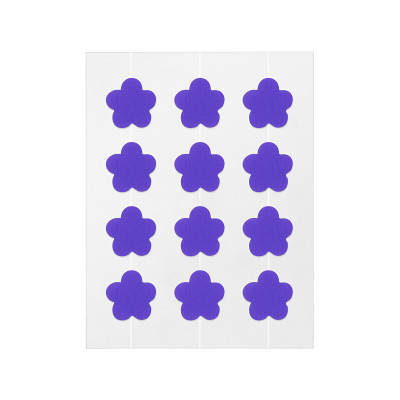
Sleep Patch Ingredients: What the Evidence Supports
Most sleep patch ingredient lists are written to sound impressive, not to survive a question. Melatonin carries real evidence; magnesium through skin is a much weaker proposition; several botanicals are included because competitors include them. If you are choosing a formula to sell, it helps to know which is which.
This is not a medical review and it is not advice on what to take. It is a buyer's view of the ingredient list — what each item is claimed to do, how strong the underlying evidence is, and what it costs you in labelling terms in different markets.
Melatonin
The one ingredient in this category with a clear mechanism: melatonin is the signal the body uses to mark the onset of night, and supplemental melatonin shifts that signal. Oral forms are widely studied; transdermal forms are less studied, and a patch's behaviour depends on the formulation and the array.
Regulatory status is the part that catches brands out, and it differs sharply:
This is why a melatonin product rarely launches in five markets at once, and why the same formula can be a supplement in one country and a prescription item in another. Confirm the classification with your importer or regulatory consultant before the artwork is approved — not after.
Magnesium
Magnesium has a genuine role in muscle function, and a topical route is popular on social media. The weak link is absorption: magnesium crosses skin slowly, and the studies that support a calming effect are mostly oral. A patch can claim the ingredient is present; it is much harder to claim the ingredient is absorbed in a meaningful amount.
Practically, magnesium in a patch is a formulation and marketing decision more than a delivery one. It is also hygroscopic, which matters for a water-soluble array — it pulls moisture and affects stability.
Valerian, passionflower and hops
These three appear together so often that buyers assume they are a fixed formula. They are not. Each has modest oral evidence, mostly for sleep-onset latency in small studies, and almost no transdermal evidence at all.
Their value in a patch is largely sensory and narrative: the herbal story sells, and the scent can matter to the user experience. Their cost is in the label, where "proprietary blend" language is now treated sceptically in several markets and where allergen and interaction statements may be required.
GABA and L-theanine
Both are popular in oral sleep products. Both are small, water-soluble molecules, which makes them chemically convenient for a dissolving array — but chemical convenience is not evidence of effect through skin. If a formulation includes them, ask what the inclusion level is and whether it was chosen for dose or for the label.
The ingredient table a buyer should ask for
The single most useful question is the third one. A formula with nine botanicals has no measurable identity; a formula with one named active and a stated dose can be tested, specified and defended.
What this means for a launch
Two formulas are usually enough: one with melatonin for markets where that is a supplement, and one without it for markets where it is a medicine. That split is cheaper than reformulating later, and it lets the same pack design serve both with a different front panel.
For how the patch itself is built and specified, see construction, dose and what to specify; for where these products sell, see the channel view of the category.
Send the formula you are considering and the market you are selling into and we will tell you which ingredients can be dosed and measured in a patch, and which ones belong on the label rather than in the specification.
Request a quote