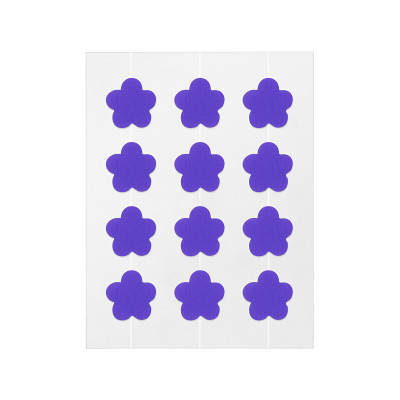
Character and Cartoon Patches: Licensing, Artwork and Print
A character patch is two projects running at once: the licence, and the print. They have different owners, different clocks and different failure modes, and a launch date is only as firm as the slower of the two.
Brands usually arrive with the artwork and assume licensing is paperwork. In practice the licence is what decides whether the artwork can exist in that market at all — and the print is what decides whether it survives at 12 mm.
The licence comes first
where
A licence for one country does not cover another. If the range is planned for the UK and the US, check that both are named, or plan a second approval cycle.
how long
Production runs outlive launch campaigns. A licence that expires before the stock sells through turns inventory into a liability.
who signs
Most licensors approve the finished artwork, not the concept. Budget a review round, and expect colour and placement comments.
None of this is a factory decision, but it is the factory's schedule that gets blamed when approval lands late. The practical move is to settle the licence before a die is cut, because a shape change after approval restarts both clocks.
Artwork that survives a small die
Vector only. A character pulled from a low-resolution asset will not hold linework at 12 mm.
Fewer colours. Three readable colours beat six that merge. On a 12 mm patch, contrast does the work that detail cannot.
Silhouette first. If the character is not recognisable as a black shape, it will not be recognisable as a patch.
Bleed past the die. Registration shifts by fractions of a millimetre; without bleed that shows up as a white sliver on the edge.
Print method, in one line each
Screen gives an opaque, thick ink — good for a bright character on a clear backing. Flexographic is the workhorse for volume with spot colours. Digital avoids plates, which suits a short run or artwork that is still moving. Whichever is chosen, the white base layer is what makes a light colour read as light on a clear film.
What to send with the enquiry
- The licensed artwork, vector, with spot colour references.
- The shape outline as a separate path, at final millimetre size.
- The territory and term, so the production plan matches the licence.
- The pack format and count, because licensing artwork usually needs to appear on the pouch as well.
Four items, one email. Without them the first reply can only be a question.
Where licensing and print collide
The most common collision is colour. A licensor approves a brand colour from a screen proof; the printer reproduces it on a clear backing film, where a light colour needs a white base layer to read as itself. Approved artwork and approved production are two different approvals, and the second one costs a plate.
The second collision is scale. Character art is usually drawn for packaging, where a 0.3 mm line is invisible. The same line on a 12 mm patch disappears entirely. Ask the licensor to approve the artwork at final patch size, not at carton size — it saves a review round later.
Send the character and the shape and we will tell you what survives at 12 mm, which print method suits the artwork, and how the licence window interacts with the tooling clock.
See shaped patch formats